Toitū Te Kupu, Toitū Te Mana, Toitū Te Whenua


Whanganui Land Settlement was the original name for the land claims process that represented everyone from the mountains to the sea. However, the Crown encouraged our four cluster groupings to work independently as four Large Natural Groupings (LNGs).
Formerly the Whanganui Southern Cluster, the settlement redress area of the Whanganui Land Settlement Negotiation Trust (WLSNT) covers a large area that encompasses all our Pā from Paraweka (Pīpīriki) across to Te Korowai o Te Awaiti, flowing down to the Whanganui River mouth.
We acknowledge there are shared interests with our neighbouring whanaunga, and discussions are ongoing.
The core business of WLSNT is primarily to negotiate the comprehensive settlement of Treaty of Waitangi claims that relate to the claimant community within the lower reaches of the Whanganui River.
The WLSNT office is based on the top floor of Tupoho House (formerly Education House), 249 Victoria Avenue, Whanganui. Feel free to pop in and have a chat with the Operational team, we look forward to seeing you.
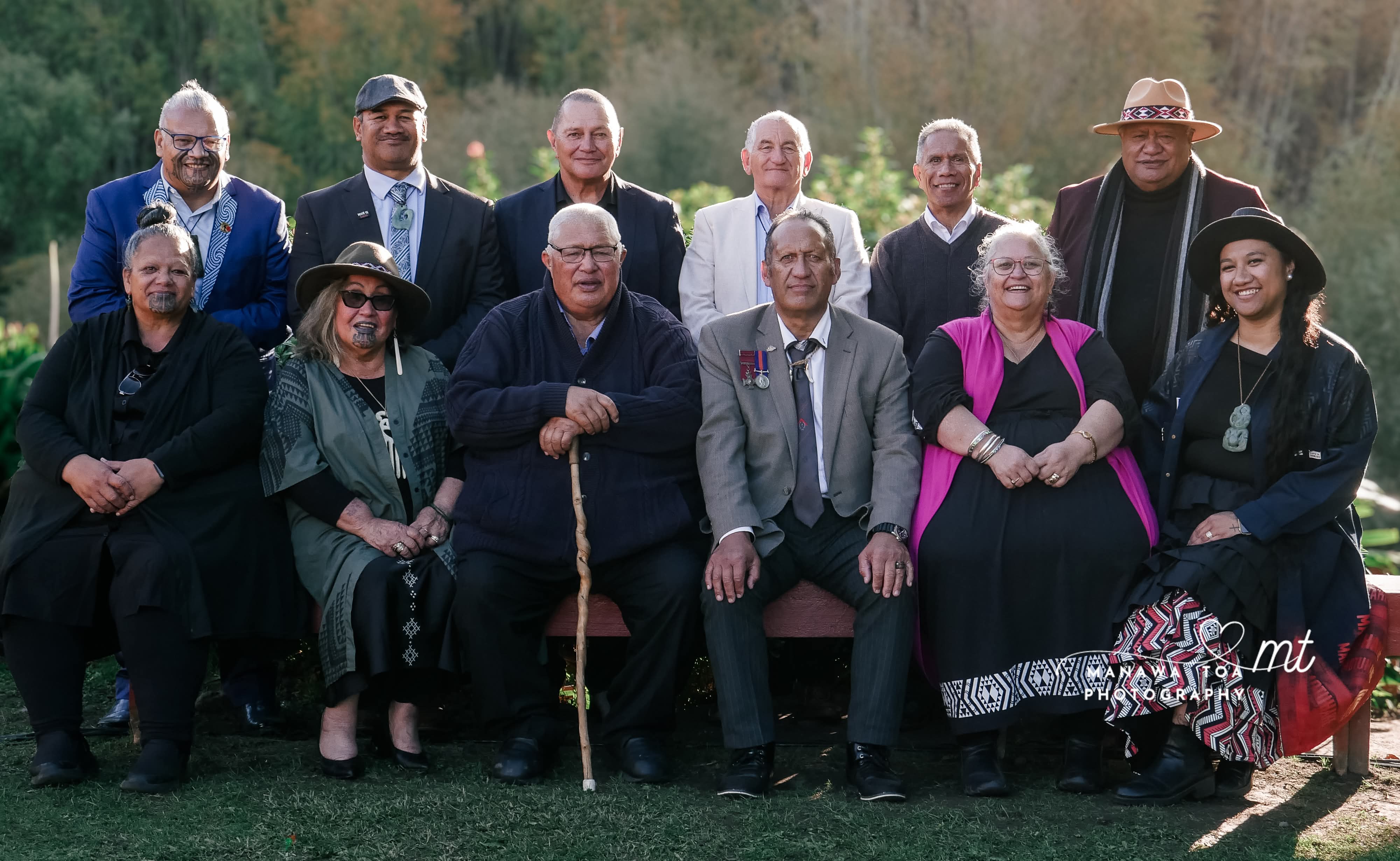

The map indicates our Settlement Redress Area, a boundary for settlement purposes only and not exclusive. It is intended to be indicative only and not definitive of a Ngā Hapū o Te Iwi o Whanganui tribal boundary.
The Trust will also be guided by the following principles:
To encourage, maintain and promote spiritual identity and connection with our taonga, the spiritual existence, intertwined with the physical. It is expressed through the intimate connection of our people with the Maunga, Awa, Moana, Tūpuna and Atua;
The definition of our Whanganui iwi, hapū and who we are – this is the bridge that links us to our land and tūpuna;
The understanding of relationships of Whanganui iwi/hapū that includes rights and responsibilities consistent with being part of a collective. It is the principle which binds our Whanganui iwi/hapū, and affirms the value of collectiveness;
The principle of unity, of moving together as Whanganui iwi with purpose and vision to advance our land claims for the mutual benefit for Whanganui iwi/hapū, and celebrating our Whanganui iwi diversity;
To advance and promote Whanganui iwi self-determination, an expression of the characteristics of people who show humility, leadership by example, generosity, diplomacy and knowledge throughout the land negotiations to benefit our iwi and hapū;
The principle that connects Whanganui iwi/hapū to our land, reaffirming this by the right of whakapapa. It defines our turangawaewae and ukaipo, these places where we belong;
The principle of behaviour and attitude that encourages the upholding of our Whanganui iwi tikanga, that acknowledges the mana of others, as expressed through sharing resources, ideas, expertise and having trust and respect for each other throughout the land negotiations;
Our language that embodies, encompasses, expresses and defines our kawa, tikanga, values and beliefs of our Whanganui iwi world-view;
To provide a clean, safe and healthy environment by promoting the protection and restoration of our whole environment as Whanganui iwi/hapū;
To ensure that all within Whanganui iwi are open, accountable and transparent to each other’s iwi/hapū as well as having excellent communication mechanisms that continually inform and update Whanganui iwi/hapū during the land claims negotiations.